
Last updated November 23, 2026
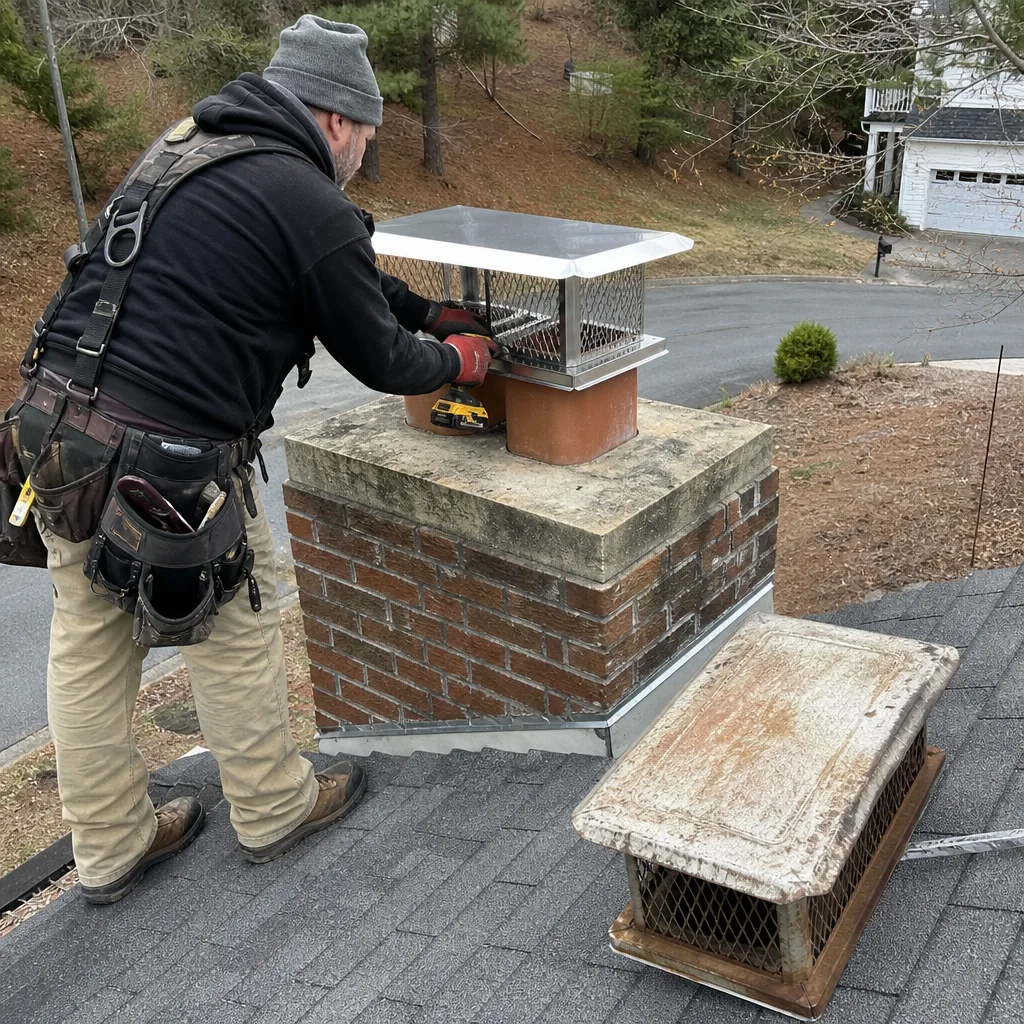
 Sweep & inspection
 Caps & crowns
 Flue relining
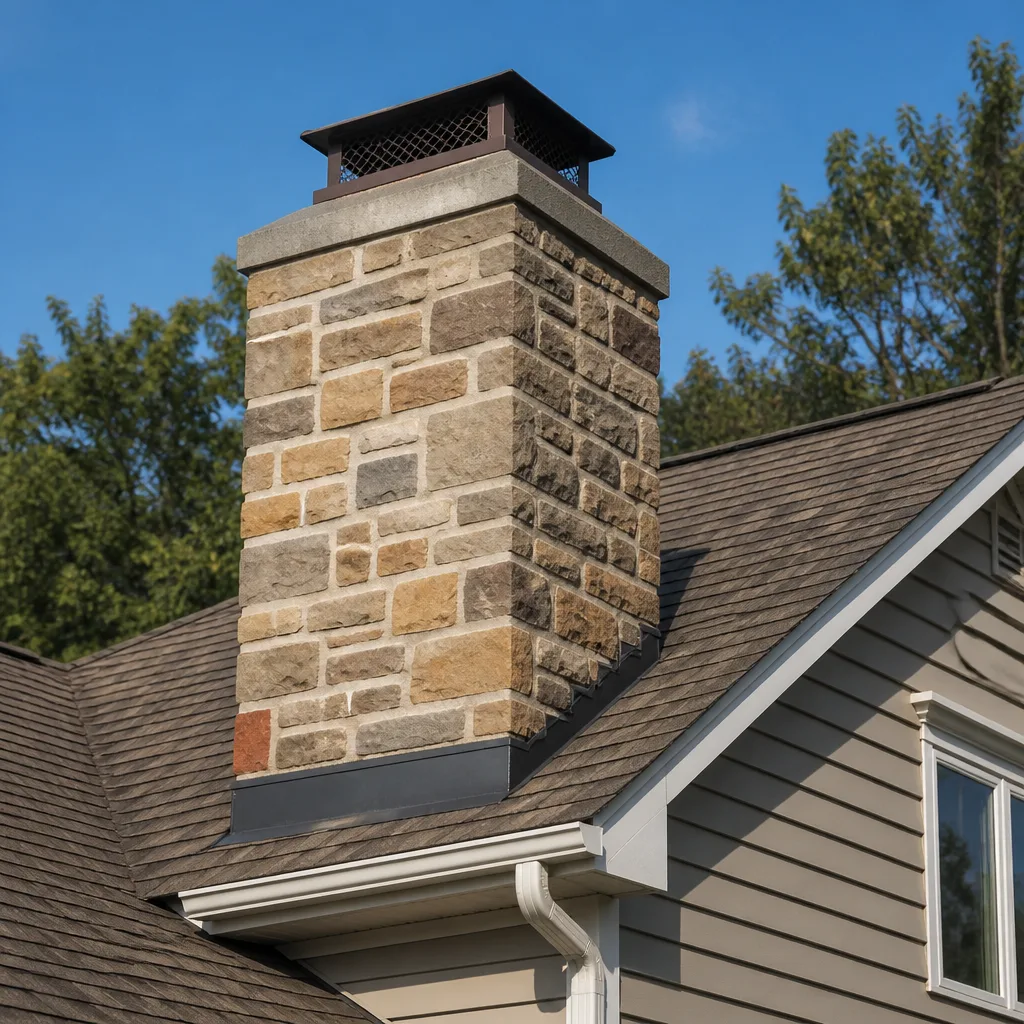 Masonry repair
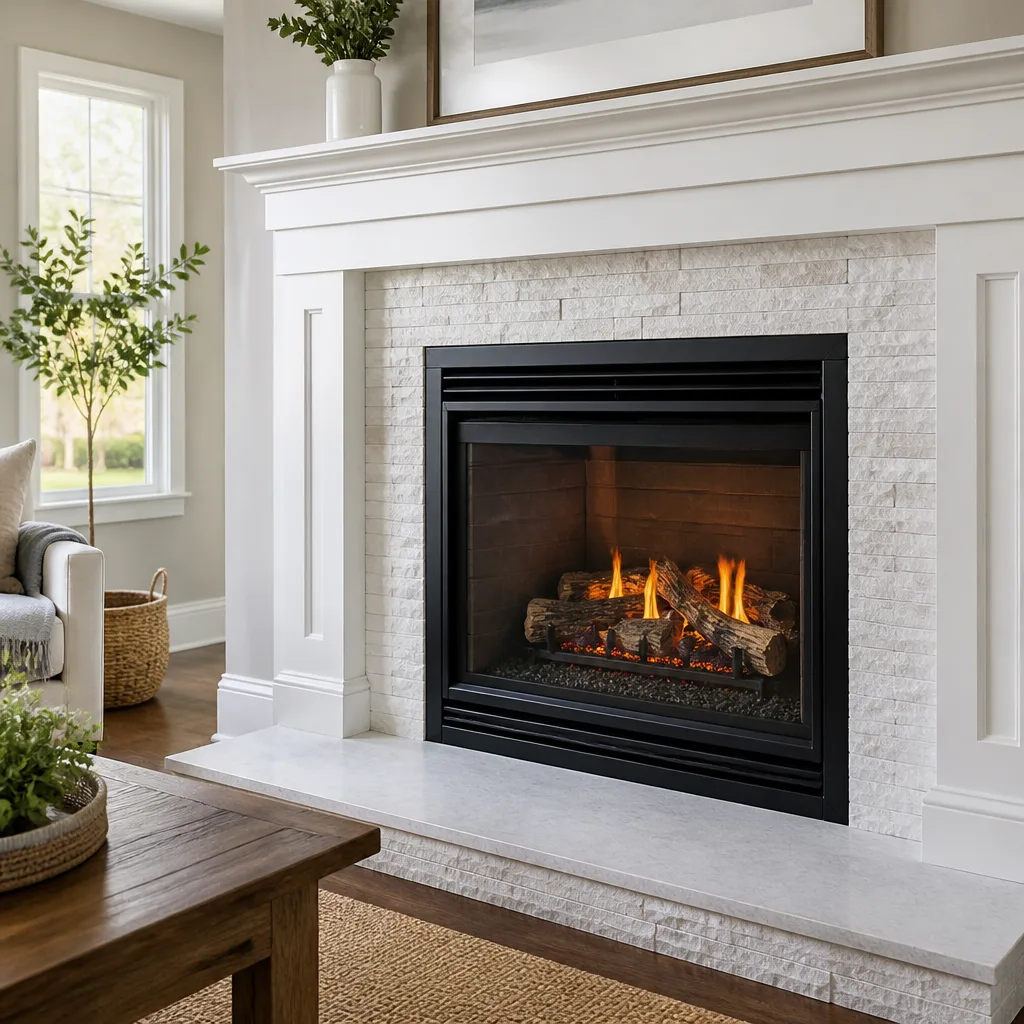 Gas fireplace service
Level 1 sweep and inspection to the NFPA 211 annual standard - flue, crown, cap, and flashing checked and photographed
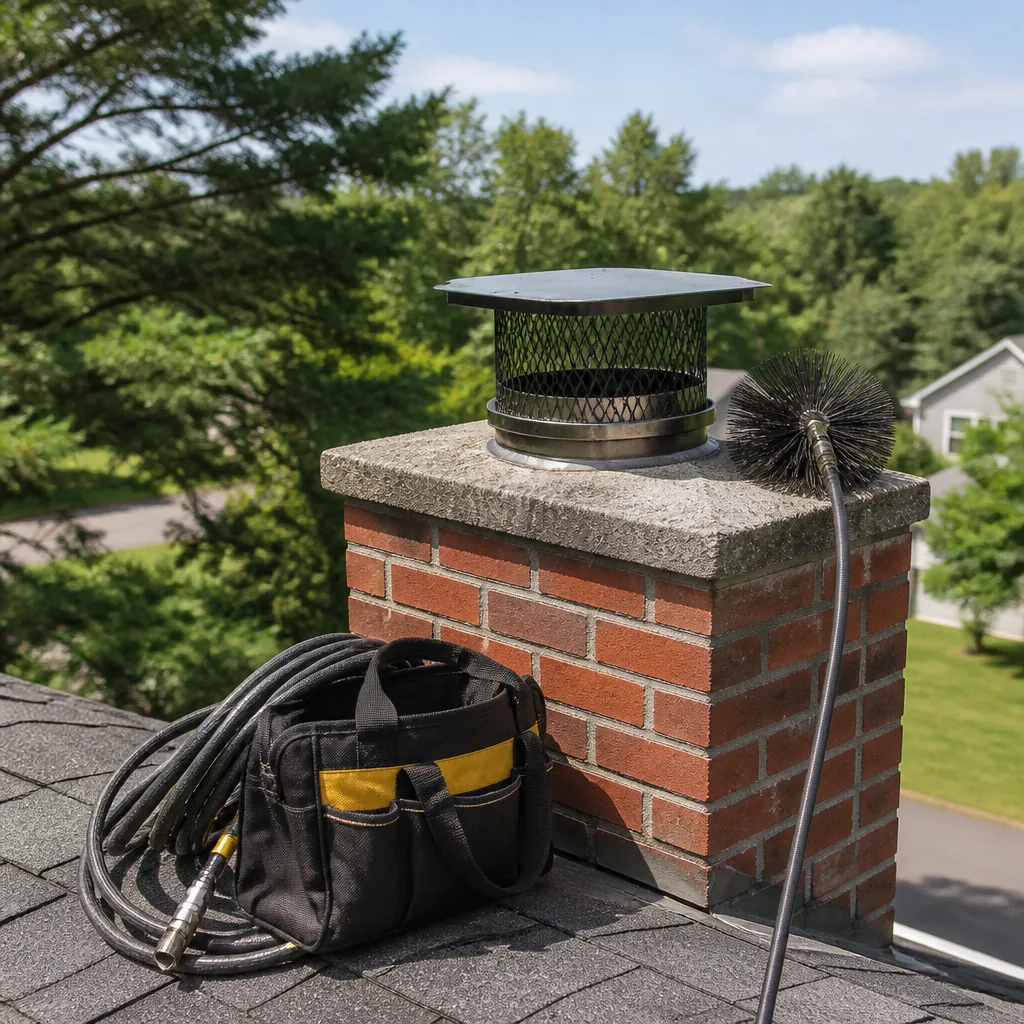
Chimney sweep logs do not sweep chimneys. They loosen some creosote - which then falls where a brush and vacuum still have to collect it.
Choosing the Right Chimney Cleaning Brand: A Buyer’s Guide for Southeast Raleigh
If a contractor can’t name the brand of waterproofing they’re applying to your chimney crown, there’s a reason, and it’s usually that the material costs a fraction of what a proper masonry sealer does per gallon. Most homeowners never ask. They get a written quote, see a line item called “waterproofing,” and assume the product behind that word is the same everywhere. It isn’t. The brands and formulations a chimney specialist carries tell you a great deal about how they work and what kind of repair they’ll propose when something fails. This guide walks through the industry brands worth knowing, why the category of product matters more than the label on the bucket, and the exact questions that separate a trade-level contractor from someone padding a quote. It’s written from Southeast Raleigh, where red clay soil and humid summers put real stress on masonry.
Styles & brands we work with
- Sweep & inspection
- Caps & crowns
- Flue relining
- Masonry repair
- Gas fireplace service
Quick Answer
The right chimney cleaning and repair brands in Southeast Raleigh are professional-grade products specified by their manufacturer for their exact application: a vapor-permeable masonry water repellent such as a ChimneySaver-type product on the crown, HeatShield for restoring a damaged flue liner, and a lifespan-tested cap from a dedicated chimney manufacturer such as Gelco or Olympia Chimney. What matters is whether the contractor can name the product, explain why it fits your chimney’s material and condition, and show you where it appears on the written quote. A brand name alone means nothing if it’s applied to the wrong surface or cut with a cheaper substitute.
Table of Contents
- The Chimney Products Brands Worth Knowing in Southeast Raleigh
- Why Product Category Matters More Than the Brand Name
- What “Professional Grade” Actually Means in Chimney Products
- How to Ask a Contractor About Materials Without Sounding Like You’re Interrogating Them
- Red Flags: Material Substitution in Written Quotes
- Masonry and Moisture in Southeast Raleigh’s Climate
- Caps and Crowns: Where Material Quality Shows First
- Liners and Resurfacing: Why Brand Choice Changes the Repair
- Common Mistakes to Avoid
- When to Call a Professional
- Frequently Asked Questions
- The Bottom Line
The Chimney Products Brands Worth Knowing in Southeast Raleigh
Chimney work draws on a small universe of specialty manufacturers. Most homeowners have never heard of them because they aren’t sold in the aisle where paint and caulk live. That’s the point. These are manufacturers who supply the trade, publish application data, and stand behind formulations tested for masonry and flue conditions. Knowing a handful of names gives you a vocabulary for the conversation.
Saver Systems makes the ChimneySaver line, including masonry water repellents and CrownCoat, a flexible coating formulated for chimney crowns that have cracked but haven’t failed structurally. HeatShield is a ceramic-and-refractory resurfacing system used to restore the inside of a clay flue liner without tearing the chimney apart. Rutland is a familiar name for sealants, fireplace cements, and creosote treatment products. Gelco and Olympia Chimney are known for caps, dampers, and flue components built to survive weather rather than a season or two.
We work with HeatShield, Gelco, Olympia Chimney, and Famco because each fills a specific job in the system. HeatShield handles liner restoration where the clay is spalled but the chimney structure is sound. Gelco and Olympia supply caps and top-of-flue components sized to fit properly rather than approximate the opening. Famco covers the liner and venting side of the work. None of these are interchangeable with a hardware store substitute, and a contractor who treats them as such is telling you something.
In Southeast Raleigh, this matters because the housing stock is mixed. You’ll find mid-century brick ranches off Kingwood Drive sitting beside newer builds, and each type of chimney ages differently. A 1960s masonry chimney with a clay liner has very different material needs than a modern factory-built unit with a metal flue. A specialist who knows the brand roster also knows which brand fits which chimney.
Why Product Category Matters More Than the Brand Name
Here’s the distinction that separates a knowledgeable buyer from a trusting one: on masonry, waterproofing products fall into two broad categories, and using the wrong one can cause damage rather than prevent it. Vapor-permeable water repellents let the masonry breathe. Film-forming sealers trap moisture inside the brick and mortar, and in a humid climate that trapped moisture finds a way out through the path of least resistance, which is usually spalling the face off your brick in a freeze or a wet season.
Masonry is porous by design. Brick and mortar absorb and release moisture continuously, and a chimney is a chimney because it’s a stack moving hot gas and outside air through a wet environment. A proper masonry water repellent penetrates the surface and lines the pores so water beads off while vapor still escapes. A film-forming sealer lays a plastic-like skin over the surface. That skin blocks liquid water going in, and it also blocks vapor coming out. In Southeast Raleigh’s summer humidity, the vapor side of that equation is not theoretical.
The same logic applies across categories:
- Crown coatings need flexibility. A rigid patch on a crown that expands and contracts cracks again within a season. CrownCoat and similar products are formulated to flex.
- Liner resurfacing needs refractory material rated for flue temperatures, not a general-purpose mortar. HeatShield is a system, not a paint.
- Caps need to be sized and anchored for wind load, not set on with adhesive and hope. Gelco and Olympia build for that.
- Fireplace cements and sealants need temperature ratings matched to the firebox, which is why Rutland products appear in the trade rather than general-purpose high-heat caulk.
In our experience, the category error is more common than the brand error. A contractor using a recognized brand of the wrong product type can still leave you with a trapped-moisture problem. Ask what category of product is going on, and why.
What “Professional Grade” Actually Means in Chimney Products
“Professional grade” is not a regulated term on a bucket. It means something specific in a few ways, and a contractor worth hiring can explain all of them. First, formulation: professional products are typically more concentrated, with higher solids content and better UV and freeze-thaw performance, which usually means a longer service interval. Second, application requirements: many of these products demand specific surface preparation, temperature windows, and cure conditions. A water repellent applied to a damp or dirty chimney will fail regardless of brand. Third, manufacturer documentation: trade brands publish technical data sheets, coverage rates, and cure schedules, which a professional uses to specify the job correctly.
That last point is the one homeowners can actually check. Ask for the product data sheet or the coverage rate. A contractor using a genuine professional product will know it. One using a retail sealant may not have it, or may quote a coverage rate that doesn’t match the product they named.
Longevity is where the difference shows up in the real world. A properly applied vapor-permeable water repellent on clean masonry will typically last several years before reapplication, while a cheap film-forming sealer can begin to fail within a season or two in a humid climate before it’s even had a chance to trap the moisture it was supposed to keep out. Those two outcomes look identical on the day of application. They look very different five years later, which is when the homeowner with the failing chimney calls us and asks what happened.
The other piece of professional grade is application method, and it’s the one most quotes leave out entirely. Water repellent needs a clean, dry, sound surface at the right temperature. Crown coatings need the crack properly prepared. Caps need correct sizing and anchoring. A written quote that specifies the product but not the prep is telling you the contractor hasn’t thought through the application, which is where most failures actually begin. Our technicians have up to 13 years of experience with these materials, and the prep step is almost always the one that determines how long the work lasts.
How to Ask a Contractor About Materials Without Sounding Like You’re Interrogating Them
You don’t need to sound like an inspector. You need two or three calm questions and the willingness to listen to the answer. A good contractor will be glad you asked, because it means you’re engaged with the work. A bad one will get defensive, wave at the bucket, or talk about how “all the products are basically the same.”
- “What product are you planning to use on the crown, and why that one?” The answer should name a category (flexible crown coating, vapor-permeable repellent) and connect it to the condition of your crown. If you hear a brand name with no reasoning, or reasoning with no brand name, follow up once.
- “Is it vapor-permeable or film-forming?” This single question separates people who understand masonry from people who are applying a sealer to a wall. On a chimney, the answer should be permeable.
- “How is the surface prepared before application?” You’re listening for cleaning, drying, crack repair, and temperature conditions. If prep is skipped in the answer, it’ll likely be skipped on the job.
- “Will the brand and product name appear on the written quote?” A professional quote specifies materials. A vague one says “seal crown” with no product named.
- “How long should I expect this to last before it needs attention again?” The answer should be a range tied to the product and your chimney’s condition, not a promise for the life of the house.
Ask all of these in a normal conversational tone. If a contractor gets defensive, that’s information too. The best ones we’ve worked alongside treat material questions as a sign you’re going to be a good client, not a difficult one.
Red Flags: Material Substitution in Written Quotes
Material substitution is the practice of presenting a professional-grade product in the conversation and then installing something cheaper on the day. It happens most on waterproofing and crown work because the visual difference between a good product and a cheap one is invisible once applied. Here’s how to spot it before the work starts.
- The quote names a service, not a product. “Waterproof chimney” is a service line. “Apply vapor-permeable masonry water repellent to crown and above-roof masonry, product specified” is a material commitment. Ask for the product name in writing before you sign.
- The price is suspiciously low for the scope. A professional-grade sealer costs several times what a retail film-forming product does per gallon. A waterproofing line item that’s a fraction of what the material cost alone should be is a clue. Pricing is set per job by the written estimate, and we’re not going to quote a number here, but you can reasonably expect a professional material line to reflect a professional material.
- The contractor can’t produce a product data sheet. Trade manufacturers publish them. Retail products often carry only a label. If the “product data” is the side of the bucket, that’s what you’re getting.
- No prep in the scope. A quote that goes straight from “clean” to “apply” with no mention of surface prep or cure time is a sign the application step is being rushed.
- The cap is “a standard cap” with no manufacturer named. Caps are sized and anchored for the flue and the wind load. A generic cap is a generic cap.
- “We use the same thing everywhere.” Different chimneys need different materials. A contractor applying one product to every chimney in Southeast Raleigh isn’t specifying, they’re stocking.
One more red flag worth naming: a quote that bundles the material into a single price with no breakdown. It doesn’t mean the work is bad, but it makes it impossible for you to verify what’s going on the chimney. A clean quote separates labor, materials, and prep so you can see what you’re buying.
Masonry and Moisture in Southeast Raleigh’s Climate
Southeast Raleigh sits in a humid subtropical climate with hot, wet summers and freeze-thaw cycles in winter. That combination is brutal on masonry. Moisture enters the brick and mortar during the wet season, and then a winter freeze expands that moisture and cracks the surface. The damage isn’t dramatic from one freeze; it accumulates across several seasons until a crown that looked fine is spalling in chunks.
This is why a vapor-permeable water repellent isn’t a luxury in Southeast Raleigh, it’s the correct response to the local climate. A film-forming sealer applied here creates a moisture trap that will find its way out through the brick face. On the older brick ranches near the Beltline and in neighborhoods around Kingwood Drive, the masonry has had decades to absorb and release moisture. It needs to keep doing that. A permeable product supports the process; a film-forming one interrupts it.
The seasonal timing also matters. Water repellent has an application window tied to temperature and surface dryness. A contractor who specifies a product but ignores the conditions in which it cures is setting up failure. In a Southeast Raleigh summer, that means understanding humidity as a real variable, not a footnote.
Crowns take the worst of it because they sit at the top of the stack, fully exposed, and span the transition between the flue and the masonry below. A crack in the crown lets water into the chimney structure where it can freeze, thaw, and re-freeze in a cycle that widens the crack each season. That’s why crown coatings and caps are the two points worth watching most closely in this climate. They’re the first line of defense, and they’re where material quality shows up fastest.
Caps and Crowns: Where Material Quality Shows First
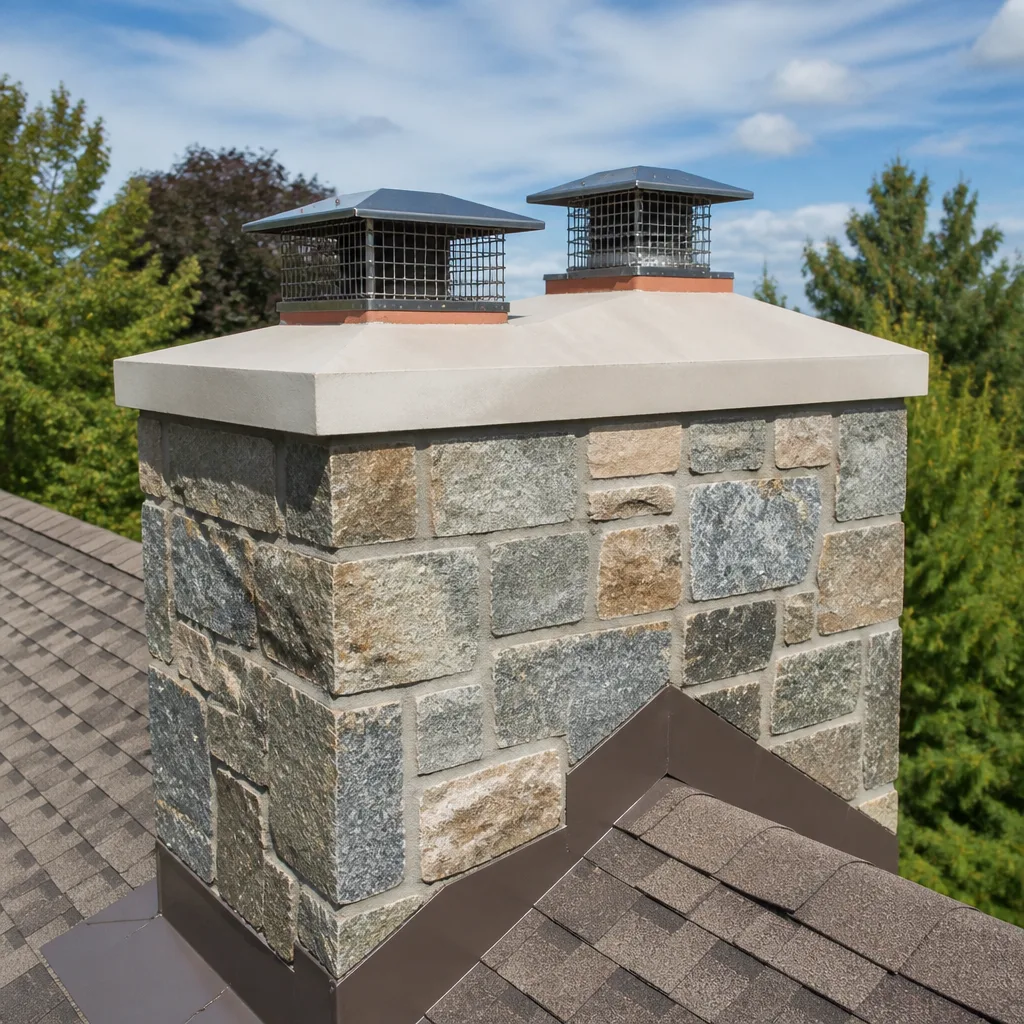
A chimney cap stops water, debris, and animals before they reach your flue, and a sound crown sheds water away from the top of the stack. Together they seal the top of the system, which is where most water intrusion into a chimney starts. In Southeast Raleigh’s rain, the difference between a proper stainless cap from a chimney manufacturer and a hardware store substitute is visible within a couple of seasons. The seal fails, the anchor rusts, and the water goes in anyway.
We install caps sized to your flue rather than approximated to it, and we work with Gelco and Olympia Chimney because their components are built for weather and load. On the crown side, a flexible crown coating from a manufacturer like Saver Systems handles the expansion and contraction that a rigid patch cannot. The two are a system: the cap keeps water out of the flue, the crown keeps it out of the masonry, and if one fails, the other is doing more work than it should. You can explore the full scope of chimney cap & crown work to see how the system fits together on a modern and an older chimney alike.
When the cap and crown are both sound, the rest of the chimney has a fighting chance. When they aren’t, every other repair you make is fighting the same water from below.
Liners and Resurfacing: Why Brand Choice Changes the Repair
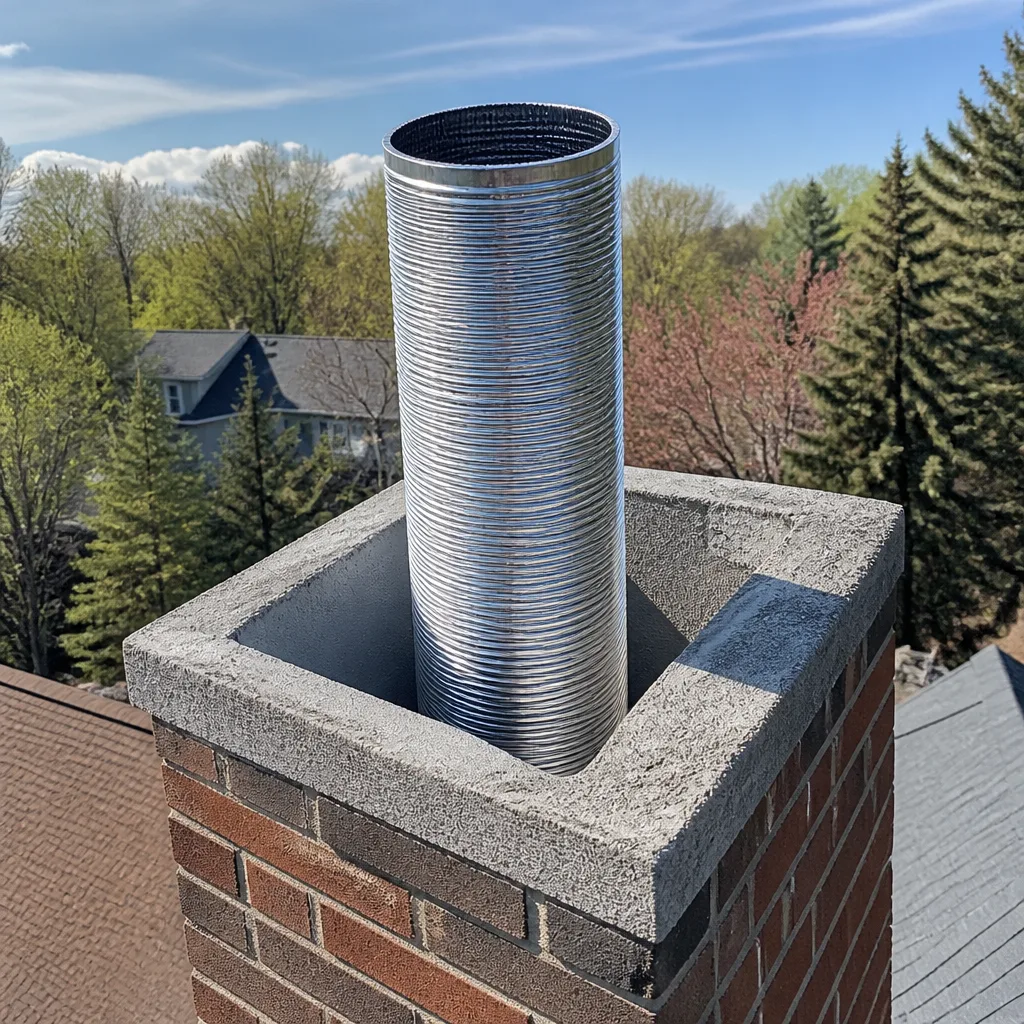
The flue liner is the layer between the fire and the structure of your house. When it’s damaged, the standard trade response has historically been to tear out the old liner and install a new one, which is expensive, disruptive, and sometimes unnecessary. Resurfacing changes that calculus. HeatShield is a specialist system that restores the interior of a clay flue liner by applying a ceramic-and-refractory coating that cures into a smooth, rated surface. Where the clay has spalled or cracked but the chimney structure itself is sound, resurfacing can restore the liner without a full replacement.
That matters in Southeast Raleigh’s older homes, where a clay flue might have twenty or fifty years of thermal cycling behind it and a homeowner is quoted thousands for a full reline they may not actually need. A contractor who knows HeatShield can assess the liner and, if appropriate, propose restoration. A contractor who doesn’t will only ever offer the replacement, because it’s the only tool in the box.
Liner work belongs to the same logic as the rest of the system. Famco liner and venting components play a role where a replacement is the right call. The point isn’t that resurfacing is always the answer; it’s that a specialist shows you the evidence and lets the condition of the liner decide. We inspect before we quote, and we assess the liner with a camera so you can see what we’re seeing. You can read more on how chimney sweep Southeast Raleigh inspections are scoped, including what the camera reveals and what it doesn’t. The important thing is that the material decision follows the diagnosis, not the other way around. For firebox and fireplace concerns, fireplace repair covers how those components are assessed in the same visit.
Common Mistakes to Avoid
- Asking for a “chimney cleaning” and accepting whatever brands come with it. Cleaning is the entry point; the materials are the substance. Know what’s going on the chimney before work begins, because in Southeast Raleigh the waterproofing decision matters more than the sweep decision in the long run.
- Hiring a generalist for specialty material work. A handyman with a truck can apply a sealer. Getting the category and formulation right on a masonry crown is a different skill. The wrong product can trap moisture and cause damage that shows up a season or two later.
- Accepting a film-forming sealer on masonry. It’s the most common material error we see. Film-forming products trap vapor, and in a humid climate that’s a slow path to spalling brick.
- Skipping the cap and crown because the sweep found no issues. Those are the two points most exposed to Southeast Raleigh rain, and they’re also the two that fail quietly until the water inside the structure tells you. Address them while the fix is still small.
- Letting a quote say “reline” without seeing the liner. A liner quote without camera evidence is a quote without a diagnosis. Ask to see the footage, and be wary if the inspection wasn’t offered or wasn’t real.
- Choosing on price alone for material-specified work. A low quote on waterproofing or crown work can mean a retail product at a professional price. Compare the materials named on each quote, not just the total.
- Not asking what happens if the product fails. A contractor who specified a professional material should be willing to stand behind the specification. Ask what the manufacturer says about reapplication and what the contractor will do if a product doesn’t perform.
When to Call a Professional
Some chimney work is straightforward maintenance, and some is material-specified repair that requires a specialist. Call us when water is staining the outside of the masonry, when the crown is visibly cracked or crumbling, when the mortar joints are soft or the brick face is flaking, or when a cap is missing, loose, or held on with whatever was handy. Call us when you smell creosote or have burned wood in a fireplace that has never been inspected, and call us when someone has quoted a reline and you want to see the liner before you agree. Call when you can’t name the product that’s going on the crown and want a written quote that does.
Chimney Sweep Southeast Raleigh offers free estimates in Southeast Raleigh. Call (833) 513-8676. We answer 24/7. Fast dispatch from 7am to 7pm, Sunday through Friday. We inspect before we quote, and we’ll tell you when work can safely wait as readily as we’ll tell you when it can’t. A chimney sweep that also handles caps, crowns, and liner restoration means one specialist covers the whole system.
Frequently Asked Questions
The names worth knowing are Saver Systems (ChimneySaver and CrownCoat), HeatShield for liner resurfacing, Rutland for sealants and cleaners, and Gelco or Olympia Chimney for caps and flue components, along with Famco for liner and venting. What matters is whether the contractor can name the product that applies to your chimney’s material and condition, and show it on the written quote. A brand name with no reasoning behind it is a badge, not a specification. Call (833) 513-8676 for an exact quote – estimates are free.
A vapor-permeable repellent lets masonry release moisture vapor while keeping liquid water out, and a film-forming sealer traps moisture inside the brick and mortar. In Southeast Raleigh’s humid summers and winter freeze-thaw cycles, trapped moisture has to go somewhere, and it usually goes out through the brick face as spalling. The permeable product is the correct category for masonry. If a quote specifies waterproofing without telling you the category, ask. Call (833) 513-8676 for an exact quote – estimates are free.
Ask for the product name in writing and a product data sheet, both of which trade brands publish. A professional quote specifies the product, the preparation method, and the application conditions. A retail product usually comes with a label, not documentation, and a quote that lumps waterproofing into a single line with no product named is the clearest red flag. Our technicians have up to 13 years of experience specifying these materials, and we’re happy to explain any line item. Call (833) 513-8676 for an exact quote – estimates are free.
Resurfacing, such as HeatShield, can restore a clay liner that has spalled or cracked when the chimney structure is still sound, which may avoid a full replacement. Whether it’s appropriate for your chimney depends on the camera inspection, and that’s a diagnosis only a proper assessment can make. Nothing is recommended without camera evidence you can see for yourself. Call (833) 513-8676 for an exact quote – estimates are free.
A chimney should be swept when the creosote layer builds to about the size that scheduling on a yearly basis makes sense for most wood-burning fireplaces, and a gas fireplace typically needs an annual inspection rather than a sweep. The right answer for your chimney depends on how much you burn and what the inspection shows. The point of a sweep is to reduce fire risk before the heating season starts, not to hit a calendar. Call (833) 513-8676 for an exact quote – estimates are free.
Skipping the sweep allows creosote to build up, and creosote is the fuel in a chimney fire. Skipping the crown and cap repairs lets water into the masonry, which in a humid climate leads to spalling and structural deterioration that costs far more to correct than the original repair would have. Neither outcome announces itself in advance. Call (833) 513-8676 for an exact quote – estimates are free.
The Bottom Line
The products a chimney contractor uses are a direct measure of how they work. A specialist who names the category and the brand, specifies the product in writing, and can explain why it fits your chimney is a specialist who’s thought through the job. A contractor who can’t name the waterproofing on your crown is telling you the material costs less than a proper one, and the chimney will pay that difference over the next several seasons. In Southeast Raleigh, where humidity and freeze-thaw are hard on masonry, that difference is visible sooner than you’d think. Ask for the product name. Ask for the category. Ask for the prep. Then decide.
Written by the team at Chimney Sweep Southeast Raleigh.
See the difference
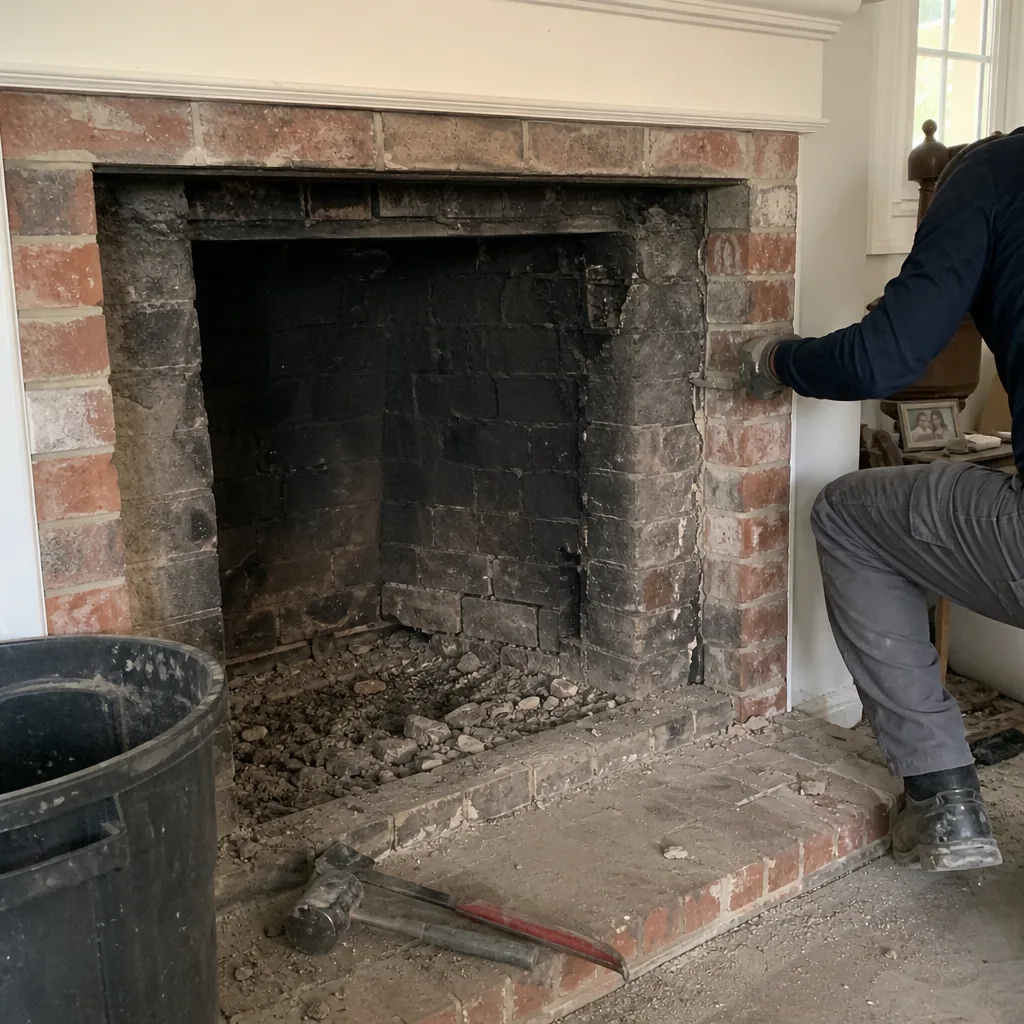 Before
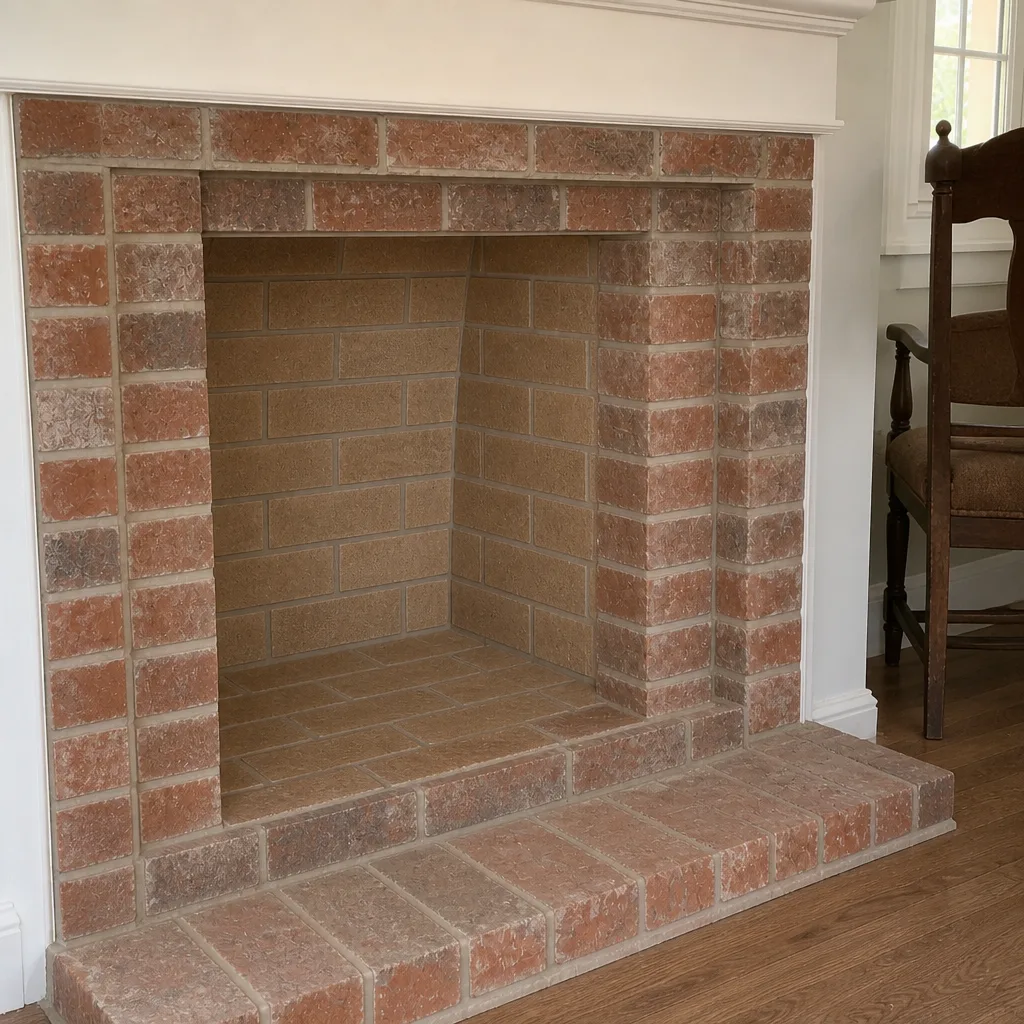 After
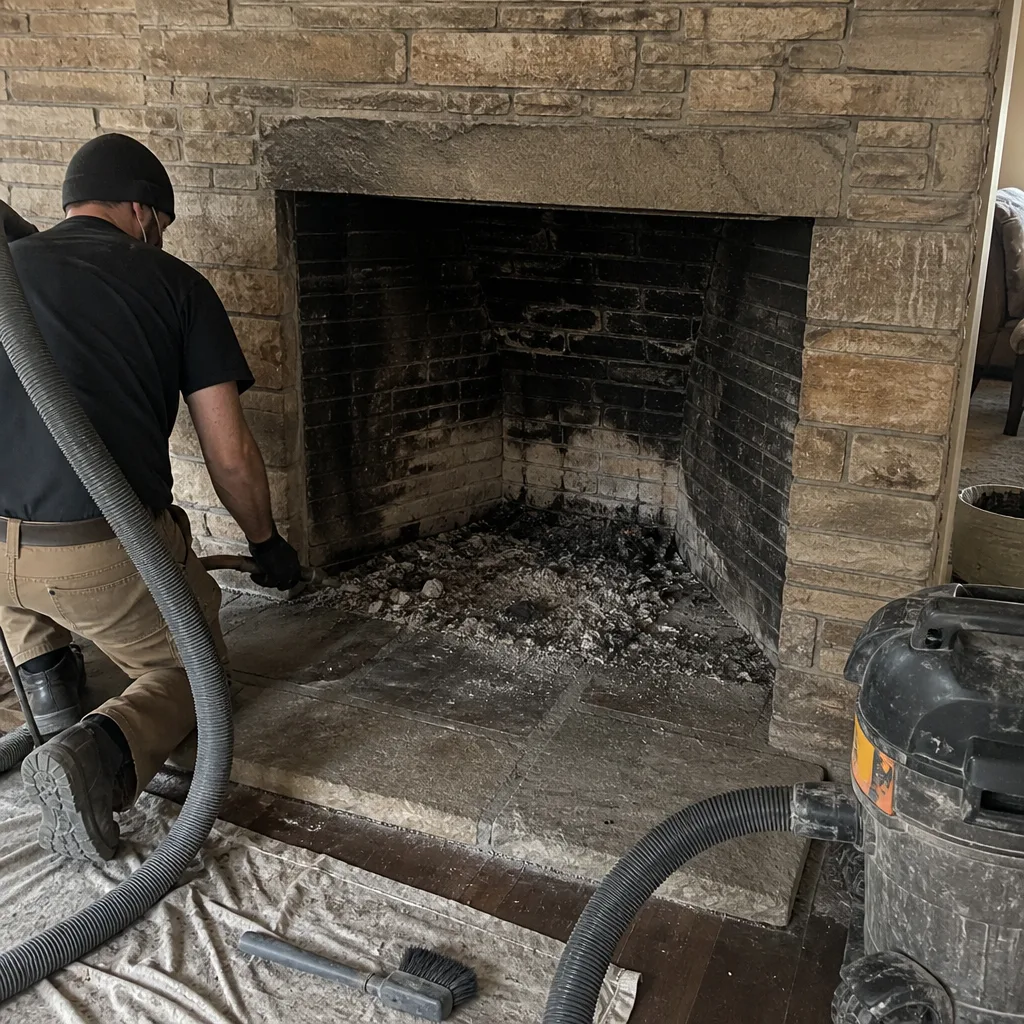 Before
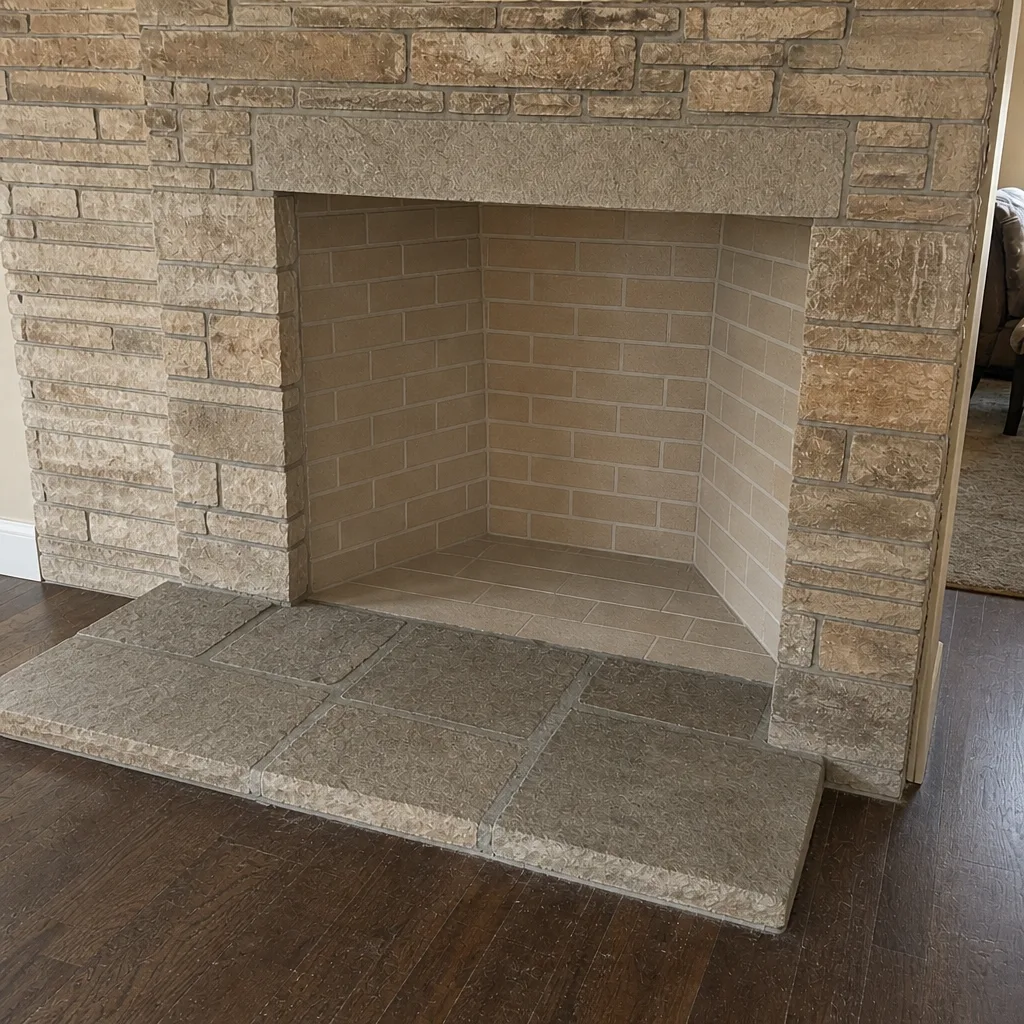 After
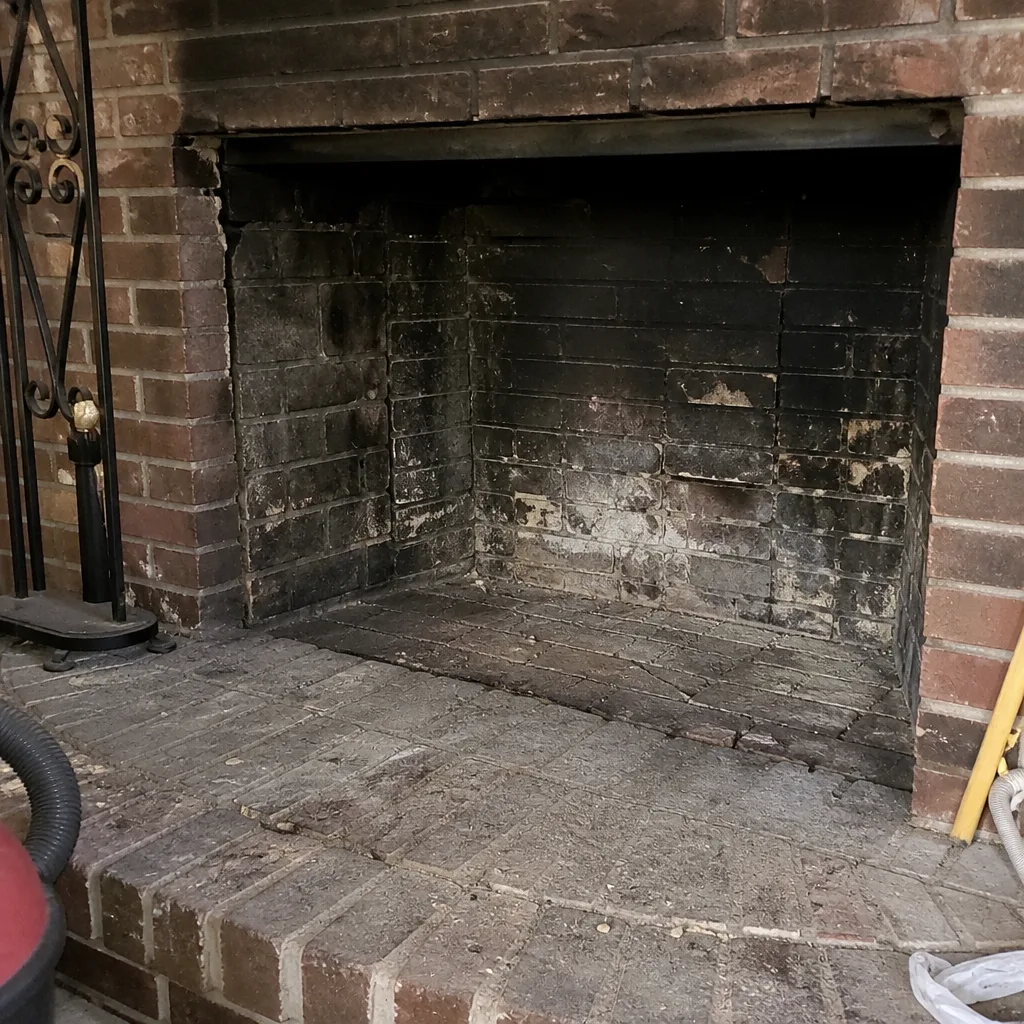 Before
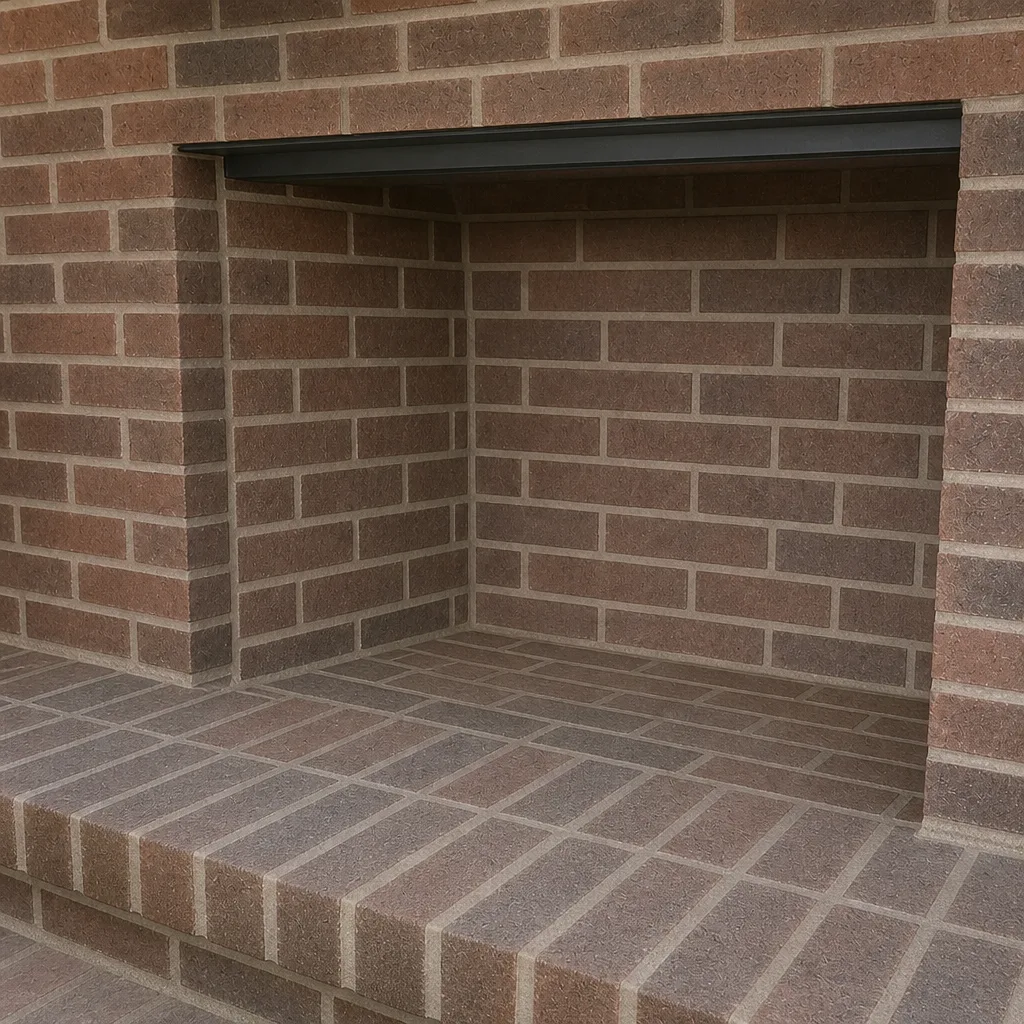 After